Learn Quran With Tajweed Rules Online
Master the art of Quranic recitation with proper Tajweed rules. Our comprehensive Tajweed course covers all articulation points, characteristics of letters, and recitation rules to help you recite the Quran as it was revealed.
Start with a free one-to-one trial and discuss your level with a Quran teacher.
Structured Quran with Tajweed Curriculum You Can Follow
Master the art of Quranic recitation with proper Tajweed rules. Our comprehensive Tajweed course covers all articulation points, characteristics of letters, and recitation rules to help you recite the Quran as it was revealed.
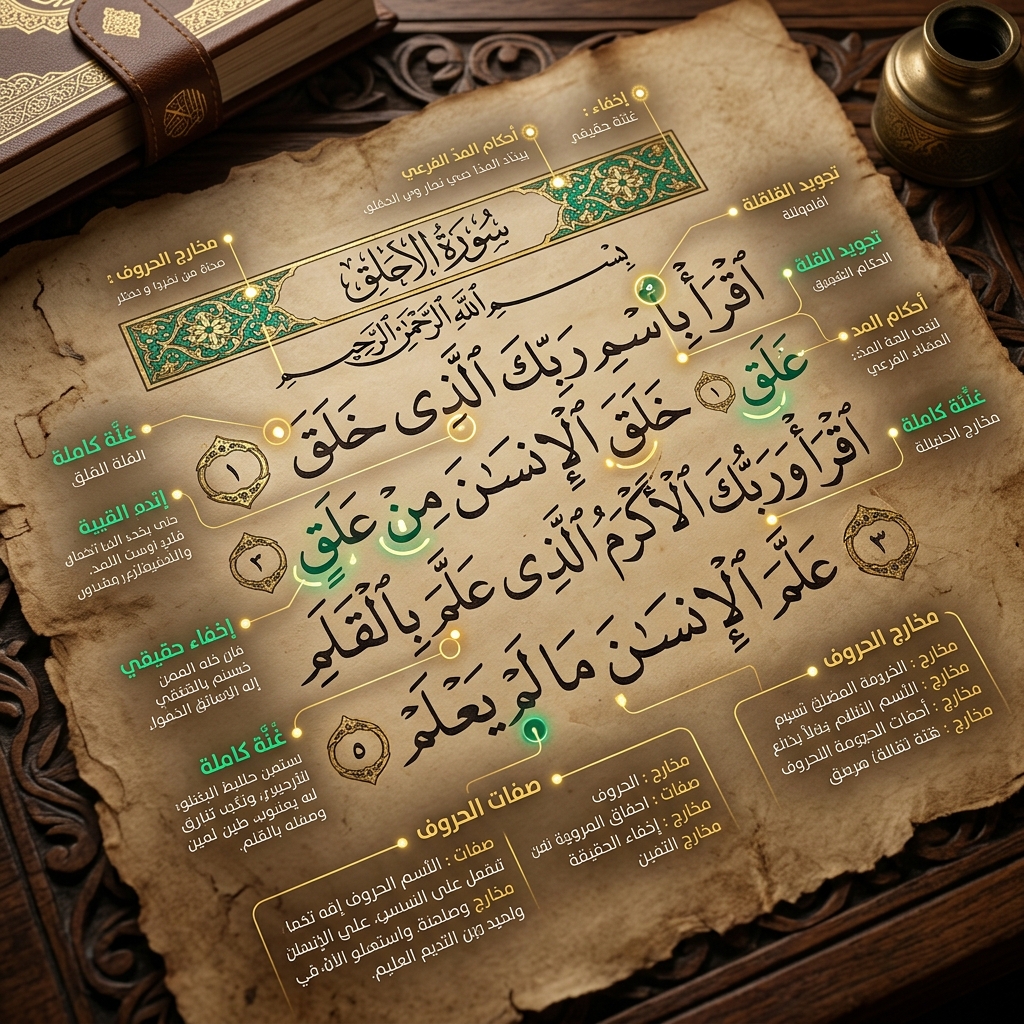
Our Tajweed instruction follows a structured progression: letter sounds → articulation points → letter characteristics → Noon Sakinah rules → Meem Sakinah rules → Madd rules → advanced rules. Each rule is taught theoretically then immediately applied to Quranic text, with real-time correction from your teacher.
Discuss your starting level, language preference and learning goals with a teacher during your trial.
Flexible Timings
Schedule classes 24/7 around school, work, and family commitments in any time zone.
Certified Tutors
Discuss your teacher’s qualifications, teaching language and course experience before starting.
1-on-1 Personalized Classes
Undivided teacher attention tailored specifically to your learning speed and goals.
Monthly Progress Reports
Transparent monthly evaluation covering Tajweed, recitation fluency, and memorization.
Online Quran Classes with Steady, Patient Tutor Guidance
Every student is paired with a certified tutor who adapts to their individual learning pace. With positive reinforcement and interactive lessons, we ensure confidence, retention, and love for the Holy Quran.
What is Included in The Classes?
Deep Dive: Explore Quran with Tajweed in Detail
The word 'Tajweed' linguistically translates to 'proficiency' or 'doing something well.' In the context of Quranic recitation, it means giving every letter of the Quran its precise rights and dues of characteristics when we recite it. Many students mistakenly believe that Tajweed is an optional embellishment—a way to make the voice sound melodious. In reality, applying Tajweed is a fundamental obligation. The Quran was revealed to the Prophet Muhammad (peace be upon him) with these exact phonetic rules, and preserving this divine transmission is a sacred duty for every Muslim.
Without Tajweed, the meaning of the Quran can be drastically altered. For example, the word 'Qalb' (with a heavy 'Qaf') means 'heart,' but 'Kalb' (with a light 'Kaf') means 'dog.' A slight mispronunciation can inadvertently change a beautiful prayer into a severe error. Our comprehensive online Tajweed course is designed to prevent these critical mistakes, ensuring that you recite the Book of Allah exactly as it was revealed, with the utmost respect and linguistic accuracy.
Quran with Tajweed FAQs
Learn a rule, then apply it in recitation
Your starting assessment
Read a short passage during the trial and explain any rules you have studied. The teacher can identify whether the priority is articulation, vowel length, Noon or Meem Sakinah, Qalqalah or stopping. Beginners who cannot yet read joined words may need Qaida first.
Practice to discuss with your teacher
Discuss a cycle of explanation, teacher demonstration, student practice and correction in an actual Quran passage. Learn a small number of rules thoroughly and revisit them in later recitation. Rules should support accurate reading rather than remain a list of definitions.
Useful progress checkpoints
- Recognise the rule in a real passage.
- Explain the basic instruction in your own words.
- Apply it while reading rather than only in an isolated example.
- Retain the correction in a later lesson.
Related learning options
Quran with Tajweed Tuition Plans
Choose a plan that fits your schedule and budget. All plans include one-on-one certified teachers, 30-minute live classes, and a free trial class before you commit.
Basic
Light PacePerfect for beginners or those with a busy schedule who want consistent, manageable progress.
- 2 classes per week (8 / month)
- 30 minutes per one-to-one class
- One-to-one with certified teacher
- Flexible 24/7 scheduling
- Free 3-day trial evaluation
- WhatsApp & coordinator support
- Monthly progress report
No credit card required
Standard
Our most popular plan — the perfect balance of consistency and affordability for steady progress.
- 3 classes per week (12 / month)
- 30 minutes per one-to-one class
- One-to-one with certified teacher
- Flexible scheduling & easy make-up
- Free 3-day trial evaluation
- WhatsApp + Email dedicated support
- Bi-weekly progress report
- Homework & practice materials
No credit card required
Premium
Intensive TrackFor dedicated students who want maximum progress, including Hifz and intensive Tajweed programs.
- 5 classes per week (20 / month)
- 30 minutes per one-to-one class
- One-to-one with senior certified teacher
- Priority scheduling & timing choice
- Free 3-day trial evaluation
- WhatsApp + Email + Phone support
- Weekly progress report
- Homework & practice materials
- Course completion certificate
- Ideal for Quran memorization (Hifz)
No credit card required
Multiple Children or Family Plan?
Get up to 15% sibling discount and customized weekend timetables.
Start with a free trial
Find the right starting point for your Quran lessons
Request a trial for Quran with Tajweed. Share your learning level and local time so we can discuss a suitable teacher and schedule.
- 1. Send your request using this form.
- 2. Confirm your teacher, lesson format and trial time with our coordinator.
- 3. Try the lesson before deciding on regular classes.
Request your trial class
Explore All Family Courses
Discover specialized Quran programs designed for children, ladies, beginners, and advanced memorizers.
View All Courses